
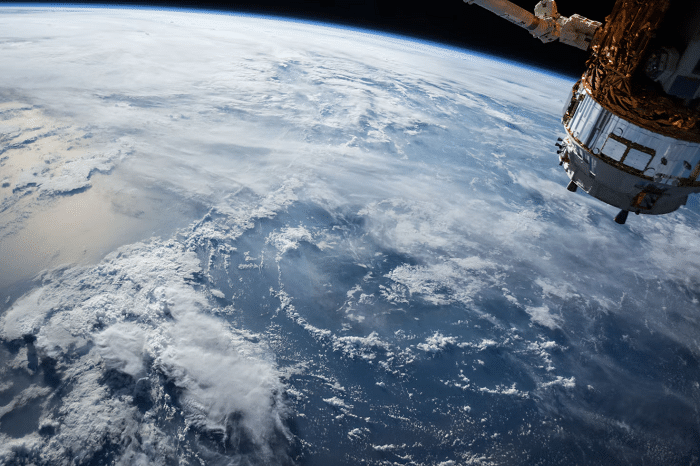
OCTOBER 16, 2026 – Space exploration has always required scientists to make decisions from millions of miles away, often with incomplete information and little room for error. A rover approaching unfamiliar terrain cannot stop to consult an engineer in real time, and a spacecraft may encounter conditions that its designers could not fully anticipate.
These challenges have traditionally demanded extensive planning, careful calculations, and close human supervision. However, artificial intelligence is beginning to change how space missions approach such problems, introducing new possibilities for interpreting information and responding to unexpected conditions.
As these capabilities develop, they raise an intriguing question: how much of the work involved in exploring space can eventually be assisted by AI? In this article, let’s find out how AI is already being used and the impact it is creating on the world.
When Space Rovers Begin To Decide for Themselves
The most fascinating use of AI in space is rover navigation. Compared to driving a car on Earth, managing a rover on Mars means taking a different approach. Time lag makes it impossible for engineers to steer the vehicle constantly in real time, and unknown terrain can cause them to hesitate over a route that seemed safe in previous images. Using AI can empower spacecraft to decide where to go, with less input from Earth.
On December 8th and 10th, 2025, Perseverance drove 210 m and then 246 m on waypoints generated by AI. The commands were checked against its digital twin across more than 500,000 telemetry variables. According to Vandi Verma, a space roboticist at NASA’s JPL, the fundamental elements of generative AI show a lot of promise for autonomous navigation for off-planet driving.
We already use AI for self-driving cars, so it simply makes sense to start using that technology in space where it’s truly needed. Using AI in this way could enhance subsequent lunar missions for planetary discovery, or for robotic exploration in environments that need rapid self-learning.
From Satellite Imagery to a Smarter Earth Observer
Satellites give us an increasingly granular view of the planet, but capturing images is just the beginning. Researchers and companies need to analyze that data, detect significant differences, and identify where to focus their efforts.
The fact is that we are entering a new era of space-based Earth observation. In 2024, NASA and India’s ISRO scheduled the launch of the NISAR mission. It was expected to generate over 140 petabytes of data over three years. That’s around 85 terabytes per day.
Looking at this much information would take a long time manually, but it opens up possibilities for AI-assisted analysis. Rather than having to go through and check each image one-by-one, computers could be used to spot differences across broad regions and point out which places need to be checked more closely.
That step from “this technology exists” to “this is a thing we do” is becoming more prevalent with the growth of geospatial AI, or GeoAI. We are increasingly seeing the public benefit from AI-assisted satellite imagery to meet a range of needs.
SkyFi explains that these needs could range from tracking physical activity behind public companies to getting the right imagery for critical sites. Its AI model Rowan enables one to pick a site and look at a database of satellite images from various points in time. This can be done even without any technical knowledge, as you can use plain language to interact with the AI.
It can then give the user a sense of how a construction project has evolved. Similar approaches could help for monitoring infrastructure or agricultural or forested land or natural features.
The Race to Process Information Faster and AI Infrastructure Beyond Earth
As AI advances, the availability of computing and energy will begin to shape what AI can do. Furthermore, spaceflight presents more challenges than most other applications, since onboard equipment must be constrained within tight constraints on power, mass, dependability, and bandwidth. It’s no surprise then that NASA recognizes the value of AI in space.
As a report from Microsoft notes, NASA is increasingly using AI for mission planning and risk analysis for Artemis II. In this particular use case, it was able to reduce weeks’ worth of work to ‘seconds.’ Likewise, an AI agent named SPARTAN is being used to help flight controllers sift through huge amounts of mission data and make real-time decisions.
Such use cases show how artificial intelligence can accelerate the process of reviewing large amounts of data. It frees teams, who can now spend more time analyzing anomalies and potential actions.
Similarly, AI infrastructure is also leaving Earth. There has been a push to create data centers for AI in space. A big reason for this is the abundance of energy from the sun. According to Google, a solar panel in space generates 8x the amount of power as it does on the ground.
Sending not just AI but the hardware it runs on to space simply makes sense given the real estate and power needs it requires.
Frequently Asked Questions
How is artificial intelligence used in space exploration?
AI supports autonomous navigation, satellite-image analysis, mission planning, and the detection of unusual patterns in spacecraft data. These capabilities help scientists and engineers process information more efficiently, while autonomous systems can make certain decisions without waiting for instructions from Earth. Mission teams still need appropriate safeguards and verification procedures.
Can AI analyze satellite images to track changes on Earth?
Yes, AI-assisted geospatial tools can compare satellite images collected at different times to identify changes in construction, land use, vegetation, and infrastructure. For example, a user can monitor a development site to see how its footprint changes over time. Results depend on image quality, observation frequency, and environmental conditions.
Why are companies considering data centres in space?
Space-based data centres could take advantage of solar energy and potentially process information closer to where it is collected. However, the concept presents significant engineering and financial challenges, including radiation protection, heat management, launch costs, maintenance, and data transmission. Its long-term viability will depend on whether these benefits outweigh the additional expenses.
Key Numbers & Facts at a Glance
| AI use in Mars rover navigation | Helped Perseverance drive using AI-generated waypoints by checking against over 500,000 telemetry variables |
| Expected data output of NISAR | Over 140 petabytes across three years |
| AI use in NASA | Used for Artemis II planning and risk analysis |
| Potential reason for space data center | 8x solar power generation compared to the ground |
AI is clearly expanding the possibilities of space exploration in a wide variety of ways. It’s helping spacecraft navigate unfamiliar terrain, turning satellite observations into useful insights, and accelerating the analysis required for complex missions. It’s not just space agencies and governments that benefit from AI use.
The use of geo AI has a real impact and can be leveraged by businesses around the world. It finally provides one with a 500,000-foot-up perspective that leaders always like to harp on. With data centers moving into space, it also helps ease public concerns about large installations near residential areas.