
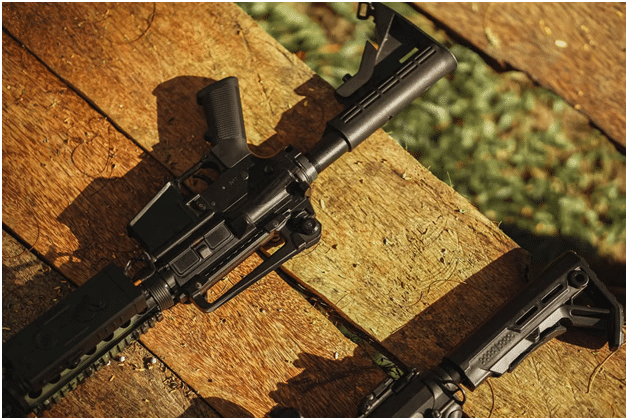
OCTOBER 23, 2026 – A rifle can look light on a specification sheet and feel very different after a long march. Add an optic, a suppressor, loaded magazines, armor, and water, and the weapon becomes one part of a much larger burden. That distinction sits at the center of the modern infantry equipment debate.
The rise of lightweight rifles raises a question that bare-weight comparisons don’t fully capture: how much weight can a military remove before it starts giving up capability? The question has become more pointed as weapon accessories compete for space and weight alongside the rifle itself.
“Lightweight” sounds like a straightforward advantage, but the label says little without a reference point. Comparisons become complicated when an unloaded rifle’s weight is set against the equipment soldiers actually carry.
What Makes a Rifle Lightweight in Military Terms
Militaries pursued lighter rifles because the soldier’s total carried load constrained mobility and endurance. Reducing weapon weight addressed that burden without requiring soldiers to leave ammunition, protection, or water behind.
An Army military utility assessment recorded soldiers’ preference for a lighter prototype machine gun. It wasn’t a rifle study, but it provides direct evidence of the broader infantry push to reduce weapon and ammunition weight.
Unloaded, the M1 Garand weighs roughly 9.5 lb, the M16A2 roughly 7.5 lb, and the M4 carbine about 6.5 lb. Under about 7 lb bare is a practical lightweight threshold for a service rifle. However, an optic, suppressor, and loaded magazines also belong in the operational comparison.
The Army’s newer XM7 challenges the idea that each generation must be lighter than the last. Its greater weight relative to the M4 reflects competing demands for range and power. Meanwhile, bolt-action rifles retain precision and sniper roles; carbines dominate general issue.
Where the Weight Actually Comes Off
Designers address two separate loads: the weapon carried in the hands and the ammunition carried in quantity. Material science changes the first; cartridge construction and selection change the second.
Carbon Fiber, Synthetic Stocks and Slimmer Barrels
Synthetic stocks replaced wood to save weight while resisting weather. A carbon fiber stock takes that approach further through composite construction, although the finished weight still depends on its shape, fittings, and intended use.
A carbon fiber barrel isn’t simply a barrel made from carbon. Commercial designs pioneered by makers such as Proof Research wrap a thin steel liner in composite to reduce weight while retaining stiffness. The steel still performs the barrel’s central task.
Slim-profile barrels remove material directly; fluting removes selected material while retaining a larger outside diameter. Shorter barrel length offers another route to lower weight, but these choices introduce heat and velocity tradeoffs.
The civilian mountain-rifle tradition supplies useful context. Jack O’Connor helped popularize the carrying rifle, while New Ultra Light Arms made low-weight bolt-action construction a defining focus. Neither establishes the requirements for a general-issue military weapon.
Lighter Cartridges and the Ammunition Load
Cartridge weight matters repeatedly, across every magazine carried. The shift from 7.62 NATO/.308 Winchester to 5.56 NATO roughly halved cartridge weight, allowing a soldier to carry about twice the rounds for the same ammunition load.
Polymer-cased programs pursue further savings through case construction rather than simply choosing a smaller cartridge. Their reference point is the weight and performance of reliable brass-cased 5.56 rounds, representing the conventional brass-cased baseline for standard-issue 5.56 NATO loads. A useful comparison must hold the ammunition requirement constant, rather than crediting the case material for differences caused by another loading.
Precision-rifle cartridges introduce a different balance. Adopted by U.S. special operations for precision rifles, 6.5 Creedmoor balances recoil and longer-range performance alongside ammunition weight. The lightest cartridge isn’t automatically the appropriate cartridge for every military role.
What a Lighter Rifle Costs the Shooter
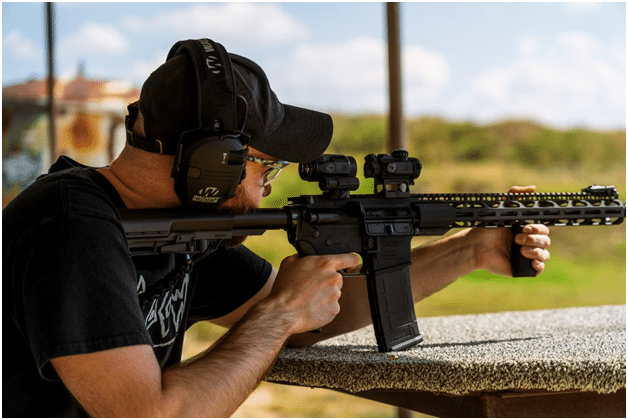
Removing material changes more than the carrying burden. The relevant question isn’t whether a rifle feels lighter at rest, but what that reduction changes during firing and repeated use.
Recoil, Muzzle Jump and the Brake Question
For the same cartridge and loading, lower rifle mass means greater free recoil. Felt recoil also depends on stock geometry, operating system, and how the rifle contacts the shooter, so weight alone doesn’t describe the experience.
Muzzle movement matters separately from discomfort. A rifle that moves more between shots demands more correction before the next aimed shot. That makes controllability part of the weight comparison, rather than an unrelated preference.
A muzzle brake redirects propellant gas to counter recoil, while a suppressor can also help control recoil. Both add weight and length back to the system. Comparing a bare lightweight rifle against a fully equipped alternative therefore misses the actual tradeoff.
A solid support, firm grip, deliberate follow-through, and resistance to flinching matter more with lighter rifles, but technique doesn’t erase the consequences of removing mass.
Barrel Heat and a Wandering Point of Impact
A thinner barrel has less material available to absorb heat and heats faster. Fluting also removes material, although two barrels with different profiles can’t be compared meaningfully by the presence of flutes alone.
Barrel heat and point-of-impact shift aren’t interchangeable concepts. Heating can change where a barrel places shots, but the amount and direction depend on its construction, stresses, and mounting. A cold-barrel accuracy result doesn’t establish how the rifle behaves through repeated firing.
That distinction separates a mountain hunting rifle’s requirements from those of a military rifle expected to sustain a different firing schedule. Carrying convenience cannot substitute for performance under the intended use.
Barrel length adds another constraint. Shortening a barrel generally sacrifices velocity with the same ammunition, making the carbine-versus-long-rifle decision a balance of handling and ballistic performance, not weight alone.
Lighter Rifles Are Here to Stay, Within Limits
The lightweight rifle reflects a practical military problem: the weapon must share a soldier’s carrying capacity with everything else required for the mission. Changes in materials and ammunition expanded the options, but they didn’t remove the costs of recoil, heat, or reduced barrel length.
Further reductions in rifle weight therefore need a stronger justification than a smaller number on a specification sheet. The next gains are more likely to come from ammunition and accessories, especially where removing more barrel or structural material would compromise the intended role.
The useful target isn’t the lightest possible rifle. It’s the lowest complete-system weight that still delivers the required capability.