
OCTOBER 29, 2026 – Getting friends together for a hunting trip can be harder than planning the hunt itself. Between duty schedules, civilian jobs, family commitments, and travel, finding a few open days takes coordination.
For U.S. veterans and active-duty service members who enjoy the outdoors, a hunting trip offers a reason to reconnect around a shared activity. Early mornings, time in the field, and conversations over dinner give the group something to look forward to beyond another exchange of messages.
A successful trip starts with clear expectations. Choosing the right location, understanding the costs, and accounting for everyone’s experience can help turn an idea into a workable plan.
Decide What Kind of Experience the Group Wants
Before selecting a destination, discuss what each person hopes to get out of the trip. Some hunters may be interested in a particular species, while others care more about spending time outdoors with friends.
Agree on whether the priority is a meat hunt, a trophy hunt, or an introduction to hunting for someone new. Discuss the preferred hunting method and how physically demanding the experience should be.
Avoid assuming everyone wants the same pace. A group can include experienced hunters, occasional hunters, and people who would rather accompany friends without hunting themselves. Identifying those differences early makes it easier to find a suitable destination.
Choose a Location That Fits the Available Time
Travel can consume much of a short trip. Compare the full journey, including driving time, arrival requirements, and the return home, before choosing dates.
For groups considering exotic hunting near Oklahoma , Valhalla Ranch is located in Shamrock, Texas, along Interstate 40. Its website lists hunting opportunities for species including red stag, axis deer, fallow deer, and scimitar-horned oryx, as well as photo safaris for visitors interested in observing and photographing wildlife.
Ask the outfitter which experiences are available during your proposed dates. Confirm the exact meeting location and arrival time rather than relying on a general map estimate.
Active-duty participants should also account for their unit’s leave approval process and any applicable travel requirements before making financial commitments.
Get a Complete Cost Breakdown
The advertised hunt price may not represent the entire trip budget. Request a written explanation of what is included and what could cost extra.
Questions worth asking include:
- Are guide services and lodging included?
- Are meals provided?
- How are animal prices determined?
- What are the charges for additional guests?
- Who arranges meat processing and taxidermy?
- What deposit and cancellation terms apply?
If the group hopes to bring meat home, discuss processing arrangements and transportation before booking. Cooler space, pickup timing, and travel distance can affect the plan.
Agree on how shared expenses will be divided. Having a clear budget for transportation, accommodations, and food helps everyone understand the commitment before reservations are made.
Match the Hunt to Each Person’s Experience
Military experience and hunting experience are different things. Familiarity with firearms does not automatically provide knowledge of animal identification, hunting regulations, shot selection, or game recovery.
Give the outfitter an accurate picture of the group’s background. Explain who has hunted before, who is new, and whether anyone needs introductory instruction.
Ask about the guide’s expectations, typical shooting distances, terrain, and equipment requirements. Make time to practice with the equipment you intend to use before departure.
A guide should also be able to explain how the hunt is conducted, what decisions remain with the hunter, and what happens when conditions do not allow an appropriate shot.
Discuss Access and Physical Requirements
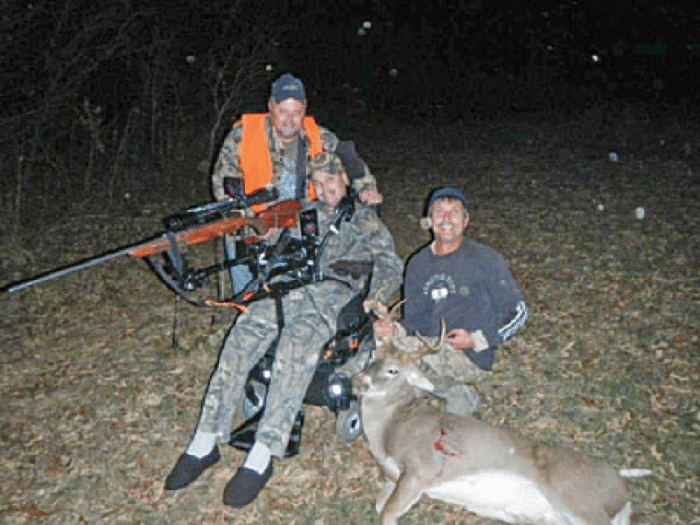
Every participant should have an opportunity to explain what they need to take part comfortably. Discuss walking distances, uneven ground, vehicle access, seating, and the length of time spent in the field.
Specific questions are more helpful than asking whether a property is accessible. Can a vehicle reach the hunting location? Does a blind require climbing steps? How far is it from lodging to the day’s meeting point?
Share relevant requirements with the outfitter before paying a deposit. This gives both sides a chance to determine whether the proposed experience is suitable.
Confirm Rules and Equipment Arrangements
Hunting requirements depend on the location, species, and circumstances. Before traveling, check the relevant state wildlife agency’s current licensing and hunter education information, and confirm the outfitter’s property rules.
Ask what equipment to bring and whether any is available on site. Discuss firearm transportation and storage arrangements, particularly if flying or crossing state lines.
Active-duty participants should also check any applicable installation policies if their travel involves entering or leaving a military base with privately owned firearms.
Keep necessary documents and booking information organized so administrative questions do not interrupt the trip.
Leave Room for Time Together
A tightly packed itinerary can make a recreational trip feel like another work assignment. Build in time for meals, conversation, and rest.
Consider how nonhunting guests will spend their day and whether the property offers activities that interest them. Confirm those arrangements in advance rather than assuming everyone can accompany the hunt.
The trip does not need to revolve entirely around a harvest. A clear plan, realistic expectations, and an experience suited to the group can make the time together worthwhile regardless of the outcome in the field.