
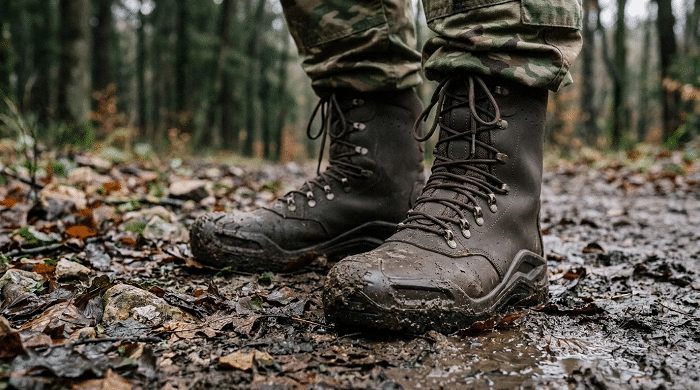
OCTOBER 22, 2026 – Ask any veteran what piece of equipment matters most, and many will say boots. Soldiers march, run, climb and stand for hours, often carrying heavy loads over rough terrain. A bad pair of boots leads to blisters, foot pain and injuries that can take a service member out of training. A good pair becomes something you stop thinking about, which is exactly the point.
Fit Comes First
No feature can make up for poor fit. Boots should hold the heel firmly without slipping, while leaving enough room for the toes to move. Try boots on in the afternoon, when feet are slightly swollen, and wear the same socks you will use in the field. Walk on an incline if possible: your toes should not hit the front of the boot when going downhill.
Breaking in is still important, even with modern boots that feel comfortable out of the box. Wear new boots around the base and on short walks before using them on long marches.
Weight and Support
Every extra gram on your feet adds up over a long march. Lightweight boots reduce fatigue and are popular for training and hot climates. However, heavier loads and rocky terrain call for more ankle support and a stiffer sole. Many service members keep two pairs: a lighter one for daily wear and training, and a more robust one for field exercises.
Waterproof or Breathable?
This is one of the most common questions. Waterproof boots with a membrane keep feet dry in rain, mud and snow, which is critical in cold and wet regions. In hot, dry environments, breathable boots without a membrane dry faster and reduce sweating. If you serve or train in mixed conditions, waterproof military boots are usually the safer choice, and you can compare different models here, including options for both summer and winter.
Traction and Sole Construction
The outsole should grip on wet rocks, mud, sand and pavement. Look for deep, multidirectional lugs and a rubber compound that stays flexible in the cold. A shock-absorbing midsole protects joints during running and jumping. Check the attachment of the sole: stitched or strongly bonded constructions last much longer under heavy use.
Regulations and Colors
Before buying, check the rules of your branch and unit. Many armies require specific colors, such as coyote or tan for desert environments and black for certain duties, and some have restrictions on materials and heights. Choosing a compliant model from the start saves money and trouble.
Trusted Manufacturers
Field experience is the best test for military footwear. Ukrainian manufacturers have gained a strong reputation in recent years because their boots are designed and tested in real combat conditions. One of them is Talan, which produces tactical and military footwear in black, coyote and olive colors. You can learn more about the brand on this website.
Taking Care of Your Boots
Clean mud and sand after every exercise, dry boots slowly at room temperature and never next to a heater. Treat leather regularly, replace worn insoles and keep spare laces. Well-maintained boots last longer and protect your feet better.
Final Thoughts
The right boots support you through every march, exercise and mission. Focus on fit, weight, waterproofing and traction, follow your unit’s regulations and invest in quality. Your feet will thank you on every mile.