
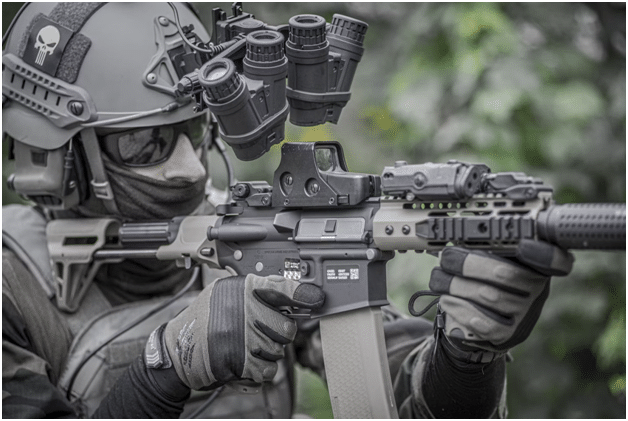
OCTOBER 28, 2026 – A firearm associated with military service isn’t necessarily a firearm a departing service member owns. That distinction becomes especially important when separation paperwork, armory records, and moving arrangements all converge. Managing a military-issue firearm after your service ends starts with a question that can get lost among those tasks: which property is actually leaving military custody?
The confusion is understandable. A service member might have an assigned weapon, a privately purchased firearm stored on base, and personal ammunition in separate locations. Those items don’t belong on one undifferentiated packing list.
Before the final military move, ownership and accountability need to be clear, particularly when a new home brings different state gun laws into the picture.
Can You Keep Your Military-Issued Weapon?
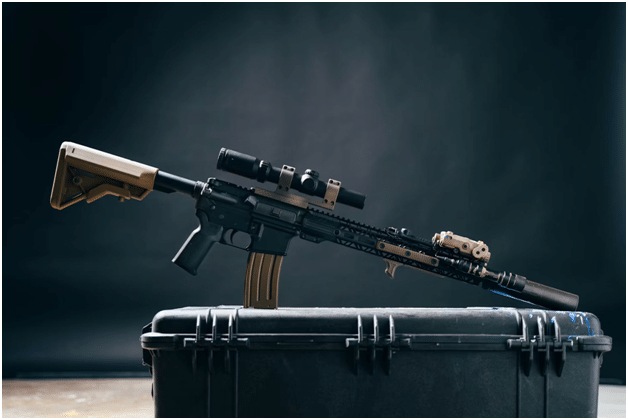
No. Issued small arms remain government property, so separation requires return and accountability, not arranging private ownership. The armory’s serial number records and written turn-in confirmation provide the practical endpoint.
A departure date alone isn’t a substitute for that documentation, and issued ammunition belongs in the unit’s return process, not household goods.
The Defense Logistics Agency (DLA) handles surplus government small arms disposition at the agency level. That process is separate from an individual’s out-processing.
Any unresolved weapon or ammunition entry needs attention through unit channels before final clearance; a missing item raises accountability questions rather than creating permission to keep it.
Personal Firearms Follow Civilian Rules, Not Military Ones
A personally purchased firearm is a different category, even if it was registered or stored on base. Its ownership and firearm disposition belong within the civilian framework administered by the ATF (Bureau of Alcohol, Tobacco, Firearms and Explosives) and applicable state authorities.
For unwanted personal firearms, the available routes depend on the firearm and jurisdiction. A single pistol can go to a local licensed firearm dealer.
A surrendered shotgun can go to local law enforcement under its acceptance procedures. An entire collection can go to a buyer equipped for volume, since WeBuyGuns.com handles full collections, subject to applicable transfer requirements.
Private transfer and arranged destruction are separate possibilities, not interchangeable shortcuts. Private-transfer requirements vary by state, while destruction needs an agreed process rather than an improvised attempt to disable a gun.
For a dealer transaction, the Federal Firearms Licensee (FFL) handles the applicable Form 4473 and background check process. The seller’s own record should identify the firearm’s serial number, the receiving party, the date, and the receipt or transfer documentation.
A buyer’s paperwork isn’t a replacement for the seller’s disposition record. These distinctions provide general information, not legal advice.
Moving Personal Guns Across State Lines After Separation
Before packing, personal firearms need a separate place in the moving plan. Military OneSource and Plan My Move provide starting points for household goods arrangements and the Defense Personal Property System (DPS), but a shipment booking shouldn’t be treated as firearm authorization.
The transportation office is the point for shipment-specific questions: whether the carrier accepts firearms, what declarations and inventory details it requires, and how ammunition must be handled. Written instructions are more useful than an assumption based on a previous permanent change of station (PCS).
The destination review belongs before departure, too. Relevant questions include whether the particular firearm and magazines are permitted, whether permits or registration apply, and when any arrival-related requirements begin. Base registration doesn’t answer those civilian questions.
During transit, the travel plan needs to distinguish transportation from carrying a firearm for ready access. Unloaded, secured, inaccessible transport is a planning baseline, not a blanket promise of legal protection.
The route, stops, origin, and destination all matter, so federal transport protections shouldn’t be treated as permission to disregard state gun laws.
An overseas return adds another checkpoint. Personal firearms can involve customs and import documentation, making that paperwork a pre-shipment issue rather than something to resolve after delivery.
On arrival, the owner’s records should account for each personal firearm and any applicable local requirements. The Transition Assistance Program, Relocation Assistance Program, and Military and Family Support Center provide routes to installation-specific guidance; they don’t replace the authorities responsible for civilian firearm rules.
Know Which Rules Apply and the Rest Falls Into Place
The answer rests on ownership, not the firearm’s connection to military service. Issued small arms belong in the armory’s return and accountability process before clearance. Personal firearms belong in a separate plan for retention, documented disposition, or relocation under applicable civilian requirements.
Keeping those categories separate prevents military paperwork from being mistaken for private ownership documentation. It also gives each task a clear endpoint: written accountability clearance for issued property, and an appropriate record and destination plan for personal guns under state gun laws.